Field Services Management Software: Improving Accountability Across Field Operations
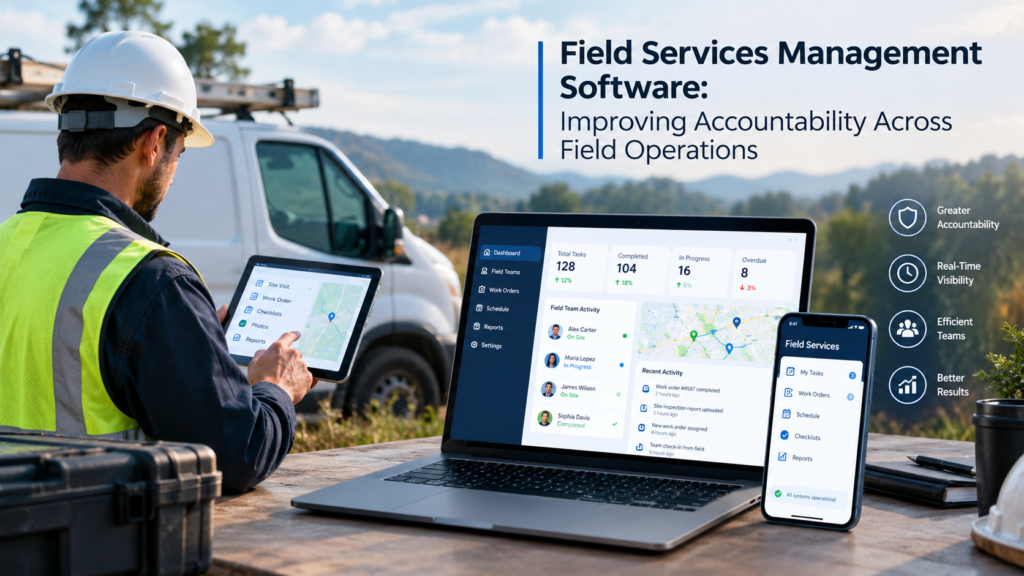
Accountability becomes difficult when employees work across multiple locations and responsibilities are distributed among different teams.
Managers need to understand assignment progress, technicians require clear instructions, and administrative employees depend on accurate completion information.
When responsibilities are unclear, important activities may be delayed or overlooked.
Field services management software helps businesses organize operational information and establish more transparent workflows that support accountability.
Why Accountability Matters in Field Operations
Accountability means employees understand their responsibilities and can communicate relevant outcomes.
It does not require constant supervision.
Instead, businesses should establish clear expectations and provide the information necessary for employees to perform effectively.
Unclear Responsibilities Create Delays
An assignment may remain incomplete because employees are uncertain who should handle the next action.
These situations can lead to repeated communication and unnecessary administrative work.
Consistent Records Improve Transparency
Accurate documentation helps managers understand what occurred during an assignment.
Field services management software supports organized records that can strengthen operational visibility.
Defining Responsibilities Clearly
Effective accountability begins before work is assigned.
Establish Assignment Ownership
Every task should have a clearly identified responsible employee or team.
This helps prevent confusion about who should complete the work.
Communicate Expected Outcomes
Technicians should understand the activities required and the information that must be recorded.
Clear instructions support consistent performance.
Identify Escalation Procedures
Some assignments may require additional assistance or management decisions.
Field services management software can support organized communication, but businesses must establish clear escalation expectations.
Improving Visibility Without Excessive Supervision
Managers need reliable information about ongoing work.
However, repeated requests for updates can interrupt technicians.
Use Consistent Status Reporting
Employees should communicate important assignment developments.
Clear reporting standards help managers understand progress.
Maintain Accessible Records
Field services management software can help organize job information so relevant employees can review operational details.
Focus on Outcomes
Accountability should emphasize completed responsibilities and accurate reporting rather than unnecessary monitoring.
This encourages employees to work independently while maintaining clear expectations.
Supporting Fair Performance Reviews
Performance assessments should consider the conditions under which employees work.
Recognize Assignment Complexity
Not every task requires the same time or effort.
Managers should account for technical requirements when evaluating results.
Consider Operational Obstacles
Missing information, travel difficulties, or unexpected customer requirements may influence performance.
Fair reviews should distinguish these factors from avoidable employee errors.
Encourage Constructive Discussions
Field services management software can support access to operational records, while employee conversations provide important context.
Combining both perspectives helps managers identify practical improvements.
Creating a Culture of Shared Responsibility
Accountability works best when employees understand how their actions affect others.
Technicians should maintain accurate records, scheduling teams should communicate changes, and managers should provide clear direction.
Encourage Early Problem Reporting
Employees should feel comfortable communicating difficulties before they become larger problems.
Review Incomplete Tasks
Recurring unfinished assignments may indicate unclear responsibilities or unrealistic expectations.
Improve Procedures Collaboratively
Managers should involve employees when refining operational standards.
Conclusion
Strong accountability supports reliable field operations by clarifying responsibilities and improving information transparency.
Field services management software helps organizations maintain structured records, coordinate assignments, and monitor relevant work progress.
However, accountability should remain focused on clear expectations and constructive improvement rather than excessive supervision.
Businesses that define responsibilities, maintain consistent documentation, and encourage open communication can reduce confusion.
These practices support a more dependable workforce where employees understand their roles and managers can make informed operational decisions.