White Label SEO India: Helping Agencies Expand Without Increasing Operational Complexity
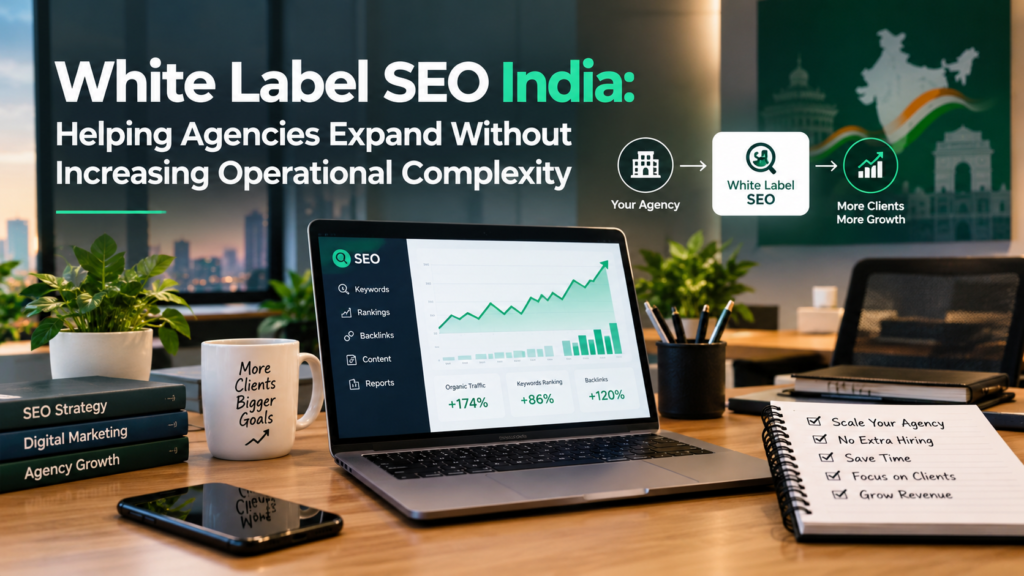
Growing a digital marketing agency often creates an unexpected challenge. As client demand increases, internal teams may struggle to manage additional optimization tasks while maintaining consistent quality. Recruiting specialists, organizing workflows, and supervising technical activities can place considerable pressure on existing resources.
This is where white label seo india becomes relevant. The approach allows agencies to collaborate with external optimization specialists while maintaining their own client relationships and branding.
By separating client management from selected execution responsibilities, agencies can build more flexible operations.
Understanding the White Label SEO Model
White label optimization involves an external team completing agreed SEO activities on behalf of another agency.
The agency remains responsible for client communication, strategic direction, and overall relationship management.
The external team handles designated activities according to established requirements and delivery standards.
How the Collaboration Works
An agency first identifies its client’s optimization objectives.
It then communicates the project scope, expected deliverables, reporting requirements, and deadlines to the external team.
Once responsibilities are agreed upon, the execution team completes the assigned activities while the agency supervises quality and communicates progress.
This structure allows agencies to maintain a consistent client-facing experience.
Why Agencies Consider White Label SEO India
Agency growth depends on the ability to deliver reliable outcomes without overwhelming internal teams.
External collaboration can create additional operational flexibility.
Access to Specialized Knowledge
Search optimization involves technical analysis, content planning, keyword research, and performance evaluation.
Different activities require different capabilities.
Working with experienced specialists allows agencies to access broader expertise without requiring every skill to exist internally.
Greater Delivery Flexibility
Client requirements frequently change.
One month may involve technical audits, while another requires extensive content optimization or website restructuring.
A flexible delivery arrangement helps agencies respond to changing workloads more effectively.
More Time for Client Relationships
Client communication, strategic planning, and business development require dedicated attention.
When routine execution responsibilities are managed through an established workflow, internal teams can focus more energy on these important activities.
Building a Reliable White Label Partnership
Successful collaboration depends on clear expectations and transparent processes.
Establishing Responsibilities
Both parties should understand which tasks belong to the agency and which belong to the external team.
Detailed project briefs reduce confusion and prevent duplicated effort.
Clearly defined approval procedures also help maintain consistent quality.
Maintaining Communication
Regular updates help agencies identify potential delays and address questions before they affect delivery.
Shared documentation, scheduled reviews, and structured reporting improve accountability.
Communication should be direct, practical, and focused on measurable progress.
Protecting Quality Standards
External execution should follow the same quality expectations as internal work.
Agencies should review completed tasks, evaluate technical recommendations, and confirm that content meets agreed requirements.
Confidentiality and appropriate access controls are equally important when client information is involved.
Evaluating Long-Term Collaboration
White label SEO India works best when both parties understand the importance of consistent improvement.
Agencies should assess delivery reliability, reporting accuracy, communication quality, and responsiveness to changing requirements.
Exploring professional search optimization expertise can also help agencies understand available capabilities and approaches.
The goal should be to create a repeatable delivery system rather than simply transferring isolated tasks.
Avoiding Common Outsourcing Challenges
Unclear project scopes, unrealistic deadlines, and inconsistent feedback can weaken collaboration.
Agencies can reduce these risks by documenting expectations, establishing review checkpoints, and maintaining ownership of strategic decisions.
A successful partnership requires active supervision even when execution responsibilities are delegated.
Conclusion
White label SEO India offers agencies an opportunity to expand their delivery capabilities while maintaining control over client relationships.
With clear communication, reliable processes, quality checks, and shared expectations, external collaboration can support sustainable agency growth.
The strongest partnerships function as an extension of an agency’s existing operations, helping teams deliver consistent work without unnecessary organizational complexity