Basement Waterproofing: A Practical Guide to Keeping Your Foundation Dry
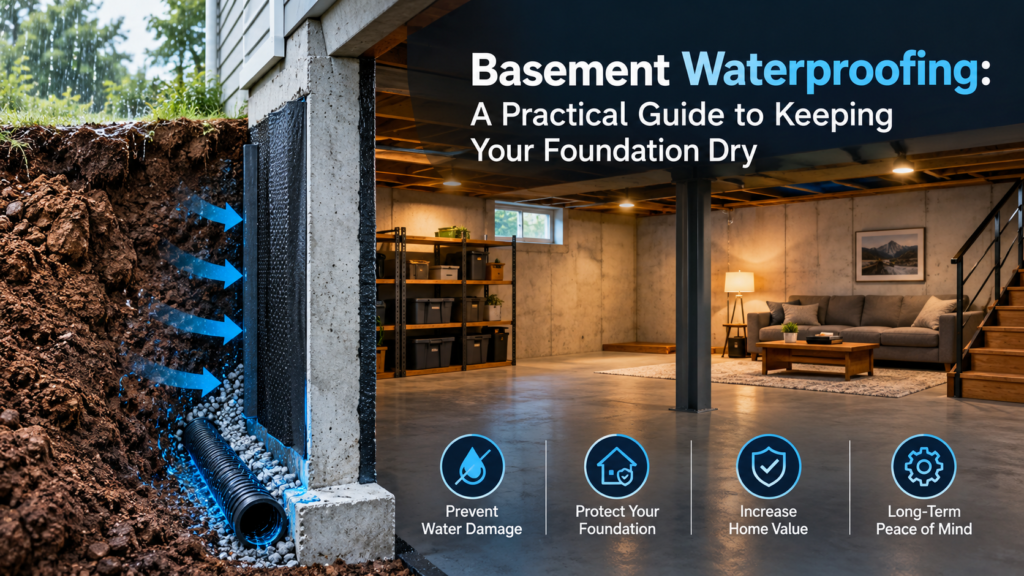
A basement should provide useful living or storage space without constant concerns about moisture. Unfortunately, groundwater, heavy rainfall, and foundation cracks can allow water to enter below-ground areas. Effective basement waterproofing addresses these risks by controlling moisture movement and reducing the likelihood of water damage.
Understanding how water enters a basement is the first step toward selecting an appropriate long-term solution.
How Moisture Reaches Basement Walls
Basement walls remain in direct contact with surrounding soil. After rainfall or snowmelt, moisture accumulates in the ground and can exert pressure against the foundation.
This pressure, known as hydrostatic pressure, may push water through cracks, construction joints, and other vulnerable openings.
Foundation Cracks
Concrete can develop cracks due to settlement, shrinkage, temperature changes, or structural movement.
Not every crack indicates a serious structural problem, but cracks that permit water entry should be investigated.
Poor Surface Drainage
Rainwater should flow away from the building.
When the ground slopes toward the foundation or downspouts discharge too close to the walls, water can accumulate near the basement.
Inadequate Drainage Systems
Blocked or deteriorating foundation drains may prevent groundwater from moving away efficiently.
As moisture builds up, basement walls and floors become more vulnerable to seepage.
Recognizing Early Warning Signs
Basement waterproofing is often considered after visible flooding, but moisture problems usually develop gradually.
Look for discoloured walls, peeling paint, damp flooring, and white powdery deposits on masonry.
A persistent musty smell may indicate moisture accumulation even when standing water is absent.
Why Condensation Matters
Not every damp basement has a foundation leak.
Warm, humid indoor air can condense against cooler basement surfaces. Identifying whether moisture comes from condensation, plumbing leaks, or groundwater helps prevent unnecessary work.
Different Approaches to Basement Moisture Control
Exterior Foundation Protection
Exterior methods focus on preventing groundwater from passing through foundation walls.
This approach may involve exposing the foundation, addressing defects, applying appropriate waterproofing materials, and improving drainage.
Interior Water Management
Interior systems manage water that reaches the foundation by directing it toward controlled drainage points.
Depending on the building, this may involve perimeter drainage channels and a sump system.
Crack Repair
Localized cracks may require specialized sealing or injection techniques.
The appropriate method depends on crack movement, water pressure, foundation material, and structural conditions.
Improving Drainage Around the Property
Basement waterproofing works best when exterior drainage receives equal attention.
Keep gutters clear and direct downspouts away from the foundation. Maintain proper grading so rainwater does not collect beside basement walls.
Window wells should also drain correctly and remain free of leaves and debris.
In areas with frequent rainfall or spring thaw, inspect these features before seasonal weather changes.
Why a Thorough Inspection Is Essential
A damp wall does not always reveal the original entry point.
Water can travel along foundation surfaces before appearing indoors. A careful assessment considers drainage conditions, visible cracks, plumbing connections, and previous water damage.
Homeowners researching basement moisture protection specialists should focus on identifying the actual source of water rather than relying on surface treatments alone.
Maintaining a Dry Basement
Even after corrective work, regular monitoring remains important.
Inspect walls following major storms, maintain sump equipment where installed, and control indoor humidity.
Avoid placing moisture-sensitive belongings directly against unfinished foundation walls.
These habits make changes easier to detect before extensive damage develops.
Conclusion
Successful basement waterproofing begins with understanding where moisture originates and how it moves around a building. Foundation conditions, surface drainage, groundwater pressure, and indoor humidity all influence basement performance. A combination of proper assessment, suitable moisture-control methods, and ongoing maintenance helps homeowners create a drier, healthier, and more dependable below-ground space.