Drywall Repair – Restore Smooth and Beautiful Interior Walls
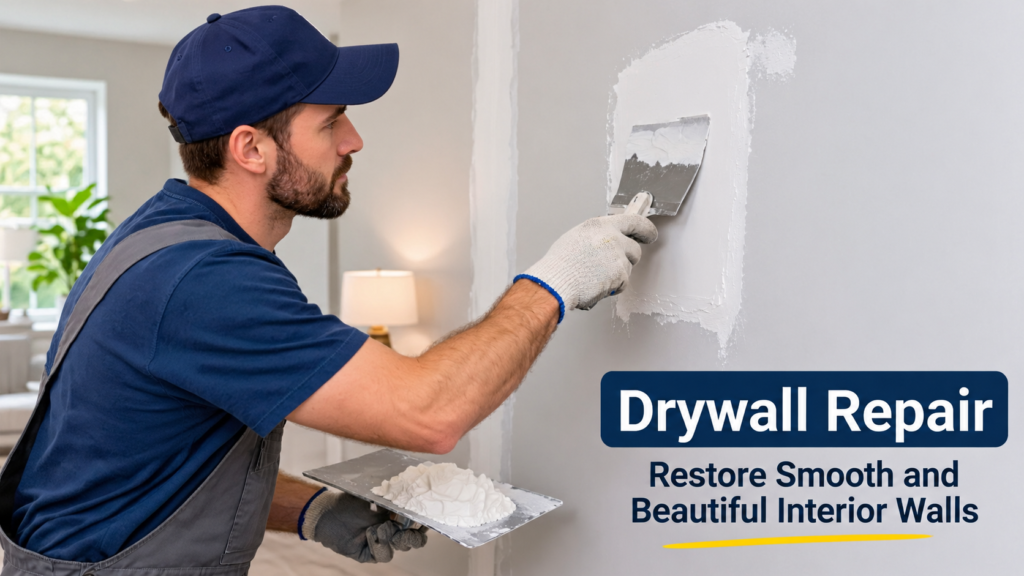
Interior walls play an important role in defining the appearance of a home. Clean, smooth surfaces create a welcoming atmosphere, while cracks, dents, and holes can make even a well-decorated room look neglected. Proper drywall repair helps restore damaged areas, maintain attractive interiors, and prevent minor imperfections from becoming more noticeable.
Understanding how wall damage develops and how it should be addressed can help homeowners make informed maintenance decisions.
What Causes Drywall Damage?
Drywall is widely used in residential interiors because it creates smooth surfaces and accommodates different decorative finishes. However, regular household activities can damage it.
Furniture movement, accidental impacts, and repeated contact with walls often cause visible imperfections.
Everyday Accidents and Impact Damage
Moving furniture through narrow hallways can leave dents or punctures. Door handles may also strike walls when protective stops are missing.
These incidents frequently create small holes that require drywall repair to restore the original surface.
Although minor damage may appear harmless, leaving it untreated can affect the appearance of surrounding finishes.
Moisture and Structural Movement
Moisture exposure can weaken wall materials and cause staining, swelling, or deterioration.
Small cracks may also develop around corners, doorways, and ceiling joints as buildings experience normal movement.
However, recurring or widening cracks should be investigated before cosmetic repairs begin.
Different Types of Wall Damage
Not every damaged wall requires the same repair method. Identifying the problem helps determine the appropriate approach.
Small Holes and Surface Dents
Minor holes left by fasteners and everyday impacts are among the most common interior imperfections.
These areas often require cleaning, suitable filling materials, smoothing, and finishing.
Successful drywall repair depends on preparing the damaged area correctly rather than simply covering the visible opening.
Larger Openings and Broken Sections
More extensive damage may require removing loose material and installing a properly supported replacement section.
The repaired area must be securely positioned before joint treatment and surface finishing.
Careful workmanship helps prevent visible edges, uneven surfaces, and premature cracking.
Damaged Corners and Seams
Wall corners and joints experience stress from movement and contact.
When joint tape separates or corner reinforcement becomes damaged, the affected materials may need replacement.
Proper drywall repair restores both the surface appearance and the integrity of the finished joint.
Why Surface Preparation Is Essential
Preparation is one of the most important stages of successful wall restoration.
Dust, loose fragments, and unstable material can interfere with adhesion. Therefore, damaged areas should be cleaned and assessed before finishing begins.
Achieving a Smooth Finish
Repair compounds often require more than one application, depending on the depth and size of the damaged area.
Each layer should dry adequately before further finishing.
Careful sanding helps blend the repaired section into the surrounding wall without creating unnecessary surface damage.
Matching the Existing Texture
Some interiors feature textured finishes rather than completely smooth walls.
Matching these patterns requires attention to application techniques and surrounding surface characteristics.
An effective drywall repair should blend naturally with the existing finish, although certain textures may remain difficult to reproduce perfectly.
When Should Homeowners Seek Assistance?
Small cosmetic imperfections may be manageable for experienced homeowners. Larger openings, repeated cracking, and extensive surface damage often require additional expertise.
Moisture-related problems deserve particular attention because the source must be corrected before restoration.
Homeowners researching nearby wall repair assistance can consider the nature of the damage and the level of finishing required.
Maintaining Repaired Walls
Preventing future damage begins with simple household habits.
Install suitable door stops, protect high-contact corners, and move heavy furniture carefully.
Monitor areas exposed to humidity and address leaks promptly.
Regular inspections help identify small cracks before they become larger maintenance concerns.
Conclusion
Effective drywall repair does more than conceal visible damage. It restores interior appearance, improves surface consistency, and supports long-term property maintenance.
By identifying the cause of damage, choosing appropriate restoration methods, and maintaining repaired areas, homeowners can keep their walls attractive and functional for years.