Heat Pump Installation: A Practical Guide to Year-Round Home Comfort
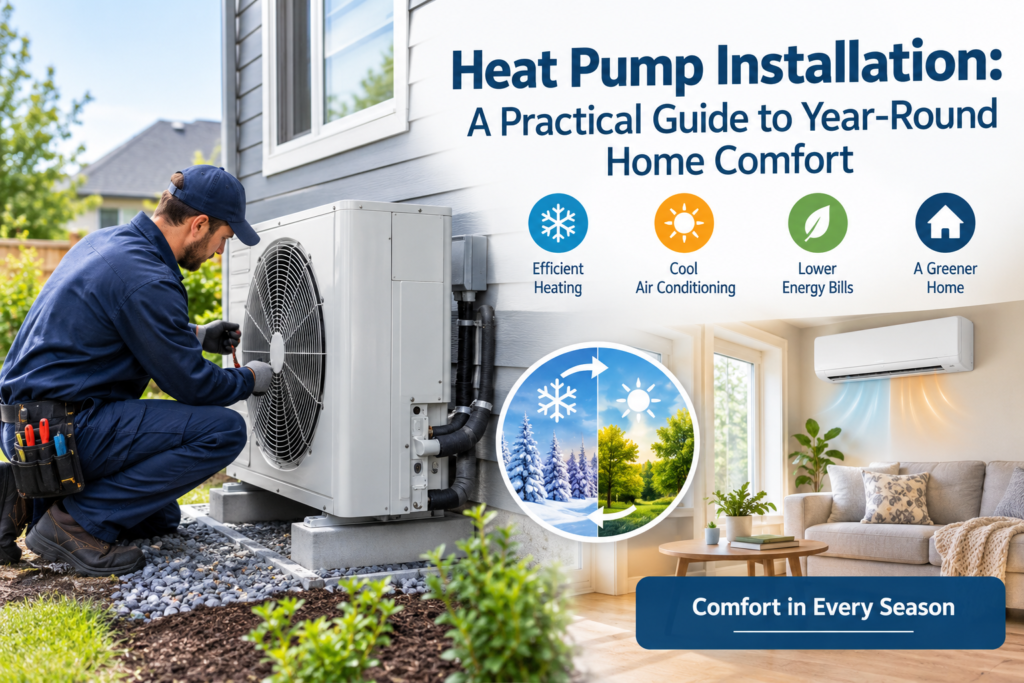
Maintaining a comfortable indoor temperature throughout the year can be challenging, especially when seasonal weather changes demand both heating and cooling. Homeowners increasingly consider heat pump installation because it offers an efficient way to manage indoor temperatures using a single system.
Unlike conventional heating equipment that generates heat, a heat pump transfers thermal energy between indoor and outdoor environments. This process allows it to warm a home during colder months and provide cooling during summer.
Understanding how installation works helps homeowners make informed decisions about comfort, efficiency, and long-term performance.
Why Heat Pump Installation Is Worth Considering
A properly installed heat pump can provide consistent temperatures while reducing unnecessary energy consumption. However, successful performance depends on selecting equipment that matches the property’s heating and cooling requirements.
Improved Energy Efficiency
Heat pumps transfer heat rather than producing it through combustion or electrical resistance. This operating principle can make them highly efficient under suitable conditions.
Professional heat pump installation helps ensure that the selected equipment operates within its intended performance range.
Heating and Cooling in One System
A heat pump can reverse its operating cycle, allowing the same equipment to provide heating and cooling.
This flexibility simplifies indoor temperature management and reduces the need for separate heating and cooling arrangements in many homes.
Consistent Indoor Comfort
Modern heat pumps can adjust their output to match changing temperature demands. When properly sized, they help minimize uncomfortable fluctuations between rooms.
Understanding the Heat Pump Installation Process
Installation involves more than positioning equipment and connecting electrical components. Each stage influences the system’s reliability and operating efficiency.
Step 1: Evaluating the Property
Before beginning heat pump installation, a qualified technician examines several important factors:
- Total conditioned floor area
- Insulation and air leakage
- Window placement and thermal performance
- Existing ductwork or distribution requirements
- Electrical capacity
- Local winter and summer temperatures
These details help determine the appropriate equipment capacity and configuration.
Step 2: Selecting the Right Equipment
Heat pumps are available in ducted and ductless configurations.
Ducted systems distribute conditioned air through existing or newly installed ducts. Ductless systems deliver heating and cooling directly to individual rooms or zones.
The appropriate choice depends on the building’s layout, comfort expectations, and available infrastructure.
Step 3: Installing Indoor and Outdoor Components
Technicians position the outdoor equipment where adequate airflow, drainage, and maintenance access are available.
Indoor components must also be positioned carefully to support effective air distribution.
Refrigerant connections, condensate drainage, electrical wiring, and equipment mounting require careful attention.
Step 4: Testing System Performance
After installation, technicians verify electrical operation, refrigerant system performance, airflow, drainage, and temperature controls.
These checks help identify problems before regular operation begins.
Common Installation Mistakes to Avoid
Even efficient equipment may perform poorly when installation decisions overlook important building characteristics.
Choosing Incorrect Equipment Capacity
Oversized systems may cycle excessively, while undersized systems may struggle during extreme weather.
Accurate heating and cooling load calculations are essential for appropriate sizing.
Ignoring Airflow Requirements
Restricted airflow can reduce efficiency and contribute to equipment problems.
Ductwork, filters, indoor unit placement, and outdoor clearance all affect system performance.
Overlooking Cold-Weather Performance
Homeowners in colder climates should consider how equipment capacity changes as outdoor temperatures fall.
Some properties may also require supplementary heating arrangements.
Maintaining Performance After Installation
Regular maintenance helps protect system efficiency and operating reliability.
Homeowners should keep filters clean, ensure outdoor units remain unobstructed, and schedule appropriate professional inspections.
Monitoring unusual noises, airflow changes, or inconsistent temperatures can also help identify developing problems.
For homeowners exploring local installation expertise, local heating and cooling specialists can provide a starting point for discussing property-specific requirements.
Conclusion
Heat pump installation is an important investment in reliable indoor comfort and efficient temperature control. Choosing appropriate equipment, evaluating the property’s heating and cooling needs, and following correct installation procedures all contribute to dependable operation. Homeowners should also consider local climate conditions, electrical requirements, and ongoing maintenance before making decisions. With careful planning and qualified installation, a heat pump can provide comfortable indoor temperatures through changing seasons while supporting efficient energy use for years to come.