Tire Shop Near Me – A Practical Guide to Safer Driving and Tire Maintenance
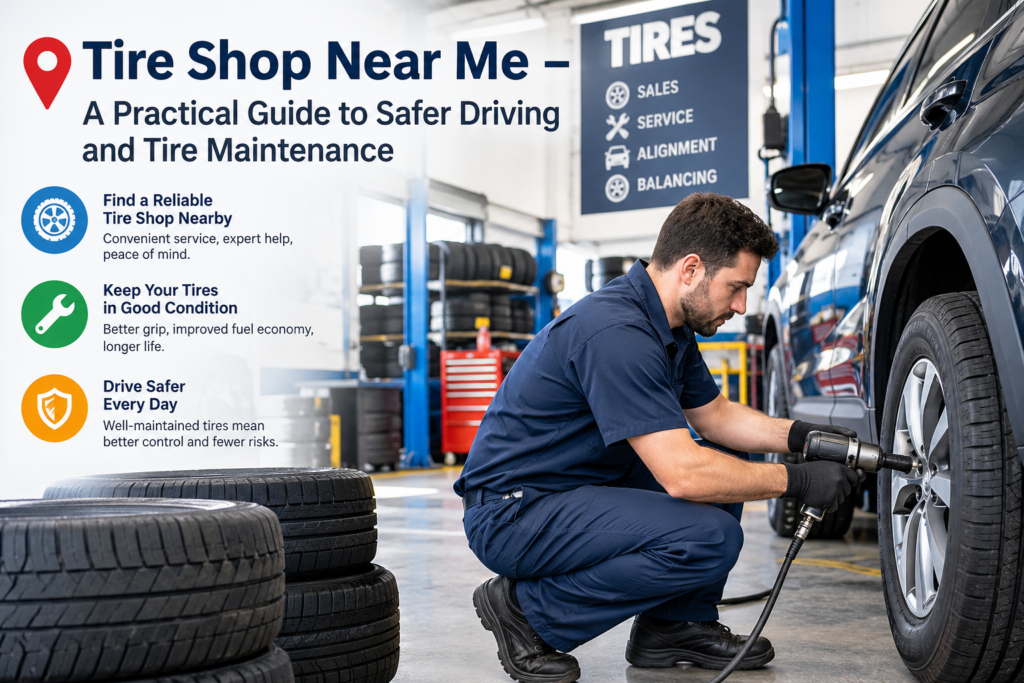
Tires are among the most important components of any vehicle. They influence steering, braking, comfort, and overall road safety. Yet many drivers overlook tire maintenance until they experience unusual vibrations, reduced traction, or visible damage.
Searching for a tire shop near me is often the first step toward addressing these concerns. However, understanding tire condition and maintenance requirements helps drivers make informed decisions before visiting a nearby location.
From seasonal weather changes to everyday driving habits, several factors influence tire performance.
Understanding Why Tire Maintenance Matters
Tires provide the contact between your vehicle and the road. Their condition directly affects how effectively a vehicle responds to braking and steering inputs.
Maintaining Reliable Road Grip
Adequate tread depth helps tires maintain traction, particularly on wet roads.
As tread wears down, a tire becomes less effective at moving water away from its contact area. This can increase the likelihood of hydroplaning.
Regular inspections help identify worn tread before it becomes a serious safety concern.
Supporting Comfortable Driving
Properly maintained tires contribute to smoother handling and reduced vibration.
Uneven wear, incorrect inflation, or wheel imbalance can make driving uncomfortable and place additional strain on vehicle components.
What to Check Before Visiting a Tire Shop Near Me
Understanding a few basic tire characteristics makes it easier to communicate concerns and identify suitable maintenance options.
Inspect Tire Tread
Look for uneven wear, exposed cords, cuts, and unusual surface damage.
Wear concentrated on one side may indicate an alignment issue. Excessive wear in the centre can sometimes result from overinflation, while wear along both shoulders may suggest underinflation.
These patterns are useful indicators, although a proper inspection is necessary to establish the cause.
Check Tire Pressure
Incorrect tire pressure affects vehicle handling, fuel efficiency, and tire longevity.
Pressure should be checked when tires are cold, using the vehicle manufacturer’s recommended values.
The recommended pressure is generally displayed on a label inside the driver’s door opening.
Seasonal Tire Considerations in Canada
Canadian driving conditions can change dramatically throughout the year.
Winter Driving Requirements
Cold temperatures affect rubber flexibility and road traction.
Winter tires are designed to perform better in colder conditions, particularly when snow and ice are present.
Drivers should inspect winter tires before seasonal installation and confirm that sufficient tread remains.
Summer and All-Season Driving
Warm-weather conditions bring different challenges, including heavy rainfall and heated pavement.
Drivers should choose tires appropriate for their climate, vehicle specifications, and driving habits.
An experienced tire shop near me can help assess these considerations.
Warning Signs That Tires Need Attention
Some tire problems develop gradually, while others require immediate inspection.
Common warning signs include:
- Persistent steering-wheel vibration
- Visible sidewall bulges
- Frequent pressure loss
- Uneven or rapid tread wear
- Unusual road noise
- Reduced traction in wet conditions
A sidewall bulge or exposed internal cords may indicate serious structural damage. Such tires should not remain in normal use.
Finding Reliable Local Tire Assistance
When evaluating a tire shop near me, consider the clarity of its inspection procedures, equipment condition, and approach to vehicle safety.
Proper tire mounting, balancing, and wheel installation require suitable tools and attention to manufacturer specifications.
Drivers can use nearby automotive care directions when exploring convenient locations.
It is also helpful to understand whether the issue involves tire wear, wheel alignment, or another mechanical component.
Simple Habits That Extend Tire Life
Check inflation regularly, especially during significant temperature changes.
Rotate tires according to vehicle and tire manufacturer guidance, where applicable.
Avoid aggressive acceleration, sudden braking, and repeated contact with curbs.
Additionally, inspect tires before long journeys and after encountering significant potholes.
These habits support consistent performance and help identify developing problems early.
Conclusion
Finding a tire shop near me is easier when you understand the factors affecting tire safety and performance.
Regular pressure checks, tread inspections, and seasonal maintenance can reduce preventable problems and improve driving confidence.
Rather than waiting for obvious damage, drivers should treat tire care as an ongoing responsibility. A proactive approach supports safer travel, more predictable handling, and longer-lasting tires.