ERACTOLL Charge Explained: Meaning, Causes & What to Do
ERACTOLL Charge Explained: learn what this unfamiliar transaction may mean, why it appears on statements, and what to do if you don’t recognize it
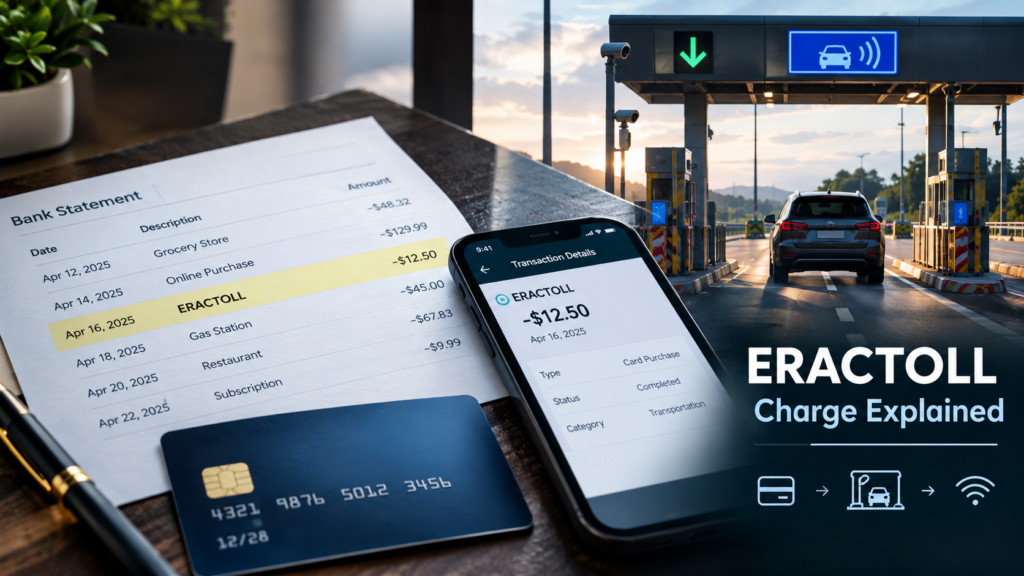
ERACTOLL Charge Explained: Understanding the Charge, Its Meaning, and What to Do
When an unfamiliar transaction appears on a bank statement or credit card bill, it can immediately raise questions. One such term that may cause confusion is ERACTOLL. For people searching for an ERACTOLL charge explained in simple language, understanding what the transaction represents is the first step toward determining whether it is legitimate, expected, or worth investigating.
An unfamiliar financial description does not necessarily mean that a card has been compromised. Merchants, payment processors, toll operators, subscription services, and digital platforms sometimes appear under abbreviated or different billing names on statements. This is why checking the transaction details carefully is important before assuming that a charge is fraudulent.
In this detailed guide, we provide an ERACTOLL charge explained overview, discuss why the name may appear on a statement, explore possible reasons for the transaction, and explain practical steps consumers can take when they do not recognize it.
ERACTOLL Charge Explained at a Glance
For anyone looking for a quick ERACTOLL charge explained reference, the term should be treated primarily as a billing descriptor rather than automatically as the name of a familiar consumer-facing company. A billing descriptor is the text displayed by a bank or card issuer to identify a transaction.
The exact meaning of ERACTOLL can depend on the payment network, merchant, location, transaction type, and circumstances surrounding the payment. A charge associated with a toll-related service, transportation payment, account adjustment, or another payment processor may sometimes appear differently from the brand name that a customer remembers.
Because statement descriptions can be shortened, the name displayed on a transaction may not always provide enough information by itself.
ERACTOLL Charge Explained: Basic Information Table
| Information | Details |
|---|---|
| Term | ERACTOLL |
| Transaction Type | Billing or card transaction descriptor |
| Possible Category | Transportation, toll-related, payment processing, or merchant billing |
| Where It May Appear | Bank statement, credit card statement, or transaction history |
| Main Concern | Identifying an unfamiliar transaction |
| Recommended First Step | Review transaction date, amount, and payment method |
| If Still Unrecognized | Contact the card issuer or financial institution |
This table provides a general starting point for understanding the term. The precise merchant behind a transaction should be confirmed through the financial institution or the transaction’s supporting details rather than assumed from the descriptor alone.
What Is an ERACTOLL Charge?
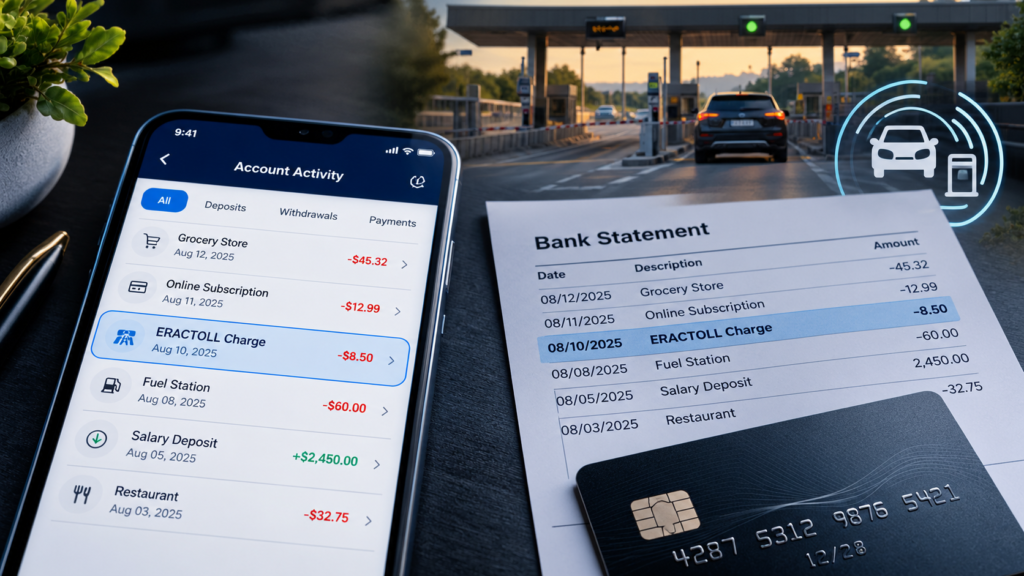
An ERACTOLL charge refers to a transaction appearing under the descriptor “ERACTOLL” or a closely related billing label. Consumers may encounter such a description while reviewing their debit card, credit card, or bank account activity.
The important point is that statement descriptors are not always identical to the brand name customers see when using a service. A business can operate under one public-facing name while its payment transactions are processed through another entity or system.
Also read:Labarty: Meaning, Background, Online Presence and Facts
This is one reason an ERACTOLL charge explained search can be difficult to resolve with only the transaction name. The descriptor may provide a clue, but it may not tell the complete story.
For example, a customer may remember paying a toll, transportation fee, parking charge, or another road-related expense under a recognizable service name. The statement, however, could display a shortened processor or billing identifier instead.
Why Might ERACTOLL Appear on a Bank Statement?
There are several possible explanations for an ERACTOLL transaction. The correct explanation depends on the transaction details and the individual’s financial activity.
Toll or Road-Related Payment
One possibility is that the transaction relates to a toll road, electronic toll collection system, bridge, tunnel, highway, or similar transportation service.
Modern toll systems frequently use electronic payment methods. Drivers may not receive a traditional receipt at the time of travel, particularly when vehicles pass through automated tolling points.
If the transaction date corresponds with recent travel, a transportation-related payment may be worth investigating first.
Delayed Billing
Another possibility is delayed billing. Some services do not charge an account immediately after a customer uses them.
A toll or transportation transaction could be processed later because the system needs to reconcile vehicle information, payment details, account records, or other administrative information.
Consequently, the date on the statement may not always match the exact date the service was used.
Account or Payment Adjustment
Some transactions represent adjustments rather than new purchases. A payment system may process a correction, balance adjustment, administrative fee, or previously pending amount.
This possibility is particularly relevant when the amount is small or differs from what the customer expected.
Recurring or Previously Authorized Payment
Customers sometimes forget about previously authorized payments. A transaction may be connected to an account created months earlier, a stored payment method, or an automated billing arrangement.
Reviewing older emails, receipts, account histories, and transportation records can help establish whether the payment was authorized.
How to Investigate an ERACTOLL Charge
If an ERACTOLL charge appears and you do not immediately recognize it, avoid jumping to conclusions. A systematic review is usually the most effective approach.
1. Check the Transaction Amount
Start by examining the exact amount charged. A small amount may correspond to a fee, toll, adjustment, or other minor transaction, while a larger amount may require more detailed investigation.
The amount can also help you compare the transaction with travel records or previous payments.
2. Check the Transaction Date
The date is one of the most useful clues.
Think about where you traveled around that time. Consider toll roads, bridges, tunnels, parking facilities, rental vehicles, transportation services, and other activities involving a stored payment card.
Remember that processing delays can cause the statement date to differ from the actual service date.
3. Examine Additional Statement Information
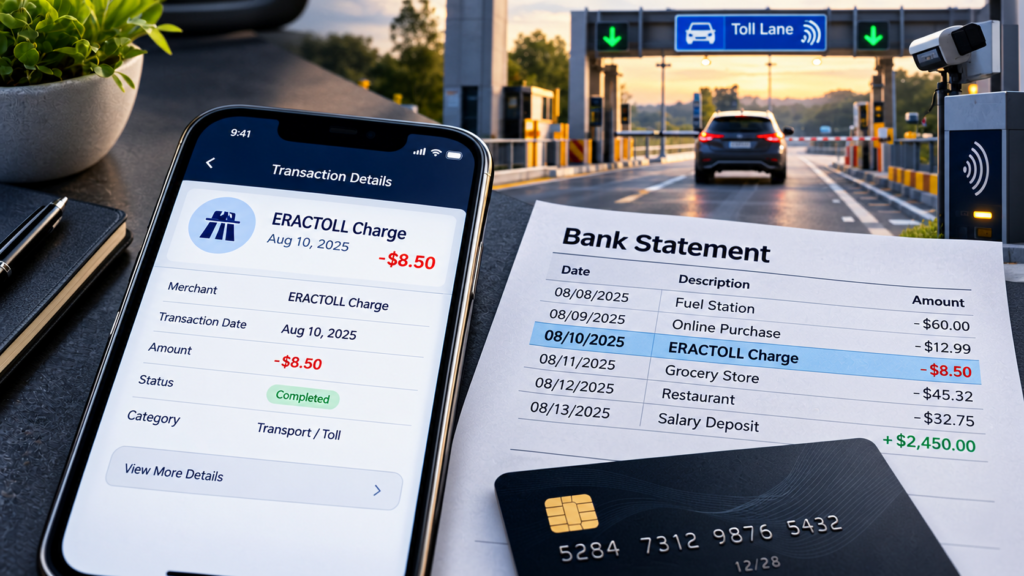
Banks sometimes provide more information when a transaction is opened or expanded inside online banking.
Look for:
- Merchant location
- Transaction category
- Reference number
- Phone number
- Payment method
- Pending or completed status
- Merchant details
These additional fields can be considerably more useful than the shortened transaction descriptor alone.
4. Search Your Email and Receipts
Digital receipts can provide an important connection between an unfamiliar charge and a legitimate purchase.
Search your email for relevant terms involving tolls, transportation, road travel, vehicle rentals, parking, payments, or account notifications. Also check text messages if a service normally sends transaction alerts.
5. Consider Vehicle Usage
If you own or regularly use a vehicle, review who may have driven it around the transaction date.
A family member, employee, colleague, or authorized driver may have used a toll road without the primary account holder immediately knowing about it.
This is particularly important for vehicles connected to shared payment or toll accounts.
ERACTOLL Charge Explained: Is It Fraudulent?
One of the most common questions surrounding an unfamiliar transaction is whether it represents fraud.
An unfamiliar ERACTOLL transaction should not automatically be classified as fraudulent. At the same time, consumers should not ignore transactions they genuinely cannot identify.
A legitimate transaction normally has some connection to an activity, account, or payment authorization. If you cannot establish that connection after checking your records, further investigation is appropriate.
Warning signs can include an amount that is completely inconsistent with your activities, multiple unexpected transactions, charges occurring in unusual locations, or several unfamiliar transactions appearing together.
The key principle is simple: investigate the transaction based on evidence rather than relying solely on the name displayed on the statement.
What Should You Do If You Do Not Recognize the Charge?
If your review does not identify the transaction, contact your bank or card issuer using the official customer-service information associated with your account.
Tell the representative the exact transaction description, amount, and date. Your financial institution may have access to merchant information that is not visible on your statement.
If the institution determines that the transaction is unauthorized, it can explain the appropriate dispute process and any necessary security measures.
Depending on the circumstances, the bank may recommend replacing the card, changing account credentials, monitoring transactions, or taking other protective measures.
How Billing Descriptors Create Confusion
Billing descriptors exist to help identify transactions, but they can sometimes create confusion for consumers.
A payment may pass through several entities before appearing on a statement. The merchant, payment processor, acquiring institution, and card network can all play different roles in the transaction.
As a result, the descriptor customers see may not resemble the name printed on a website, receipt, sign, or mobile application.
This is why searching for ERACTOLL charge explained can produce uncertainty. The descriptor itself may be only one piece of the identification process.
Can an ERACTOLL Charge Be a Mistake?
Yes, a transaction can potentially result from an administrative mistake, duplicated billing, incorrect payment information, or another processing issue.
However, determining whether an actual error occurred requires transaction-specific information.
If the amount appears twice, for example, compare both entries carefully. One may be a temporary authorization while another is the completed transaction. Pending transactions can sometimes create the appearance of duplicate billing before the account is fully settled.
If both charges remain posted and cannot be explained, contacting the card issuer is advisable.
How to Protect Yourself From Unknown Charges
Good financial habits can make unfamiliar transactions easier to identify and reduce the risk of unauthorized activity.
Enable transaction notifications when your bank provides them. Reviewing account activity regularly can also help you notice unexpected charges quickly.
Avoid sharing payment-card information unnecessarily, and use strong passwords for accounts that store payment details. If you receive a suspicious message asking for financial information, verify the request through an official channel rather than using contact information contained in the message.
Regular monitoring is particularly valuable because legitimate billing descriptors can sometimes be unfamiliar, while fraudulent transactions may also initially appear as ordinary-looking merchant charges.
ERACTOLL Charge Explained for Travelers
Travelers may encounter unfamiliar transportation-related charges more often because a single journey can involve multiple payment systems.
Road tolls, rental vehicles, parking services, fuel stations, bridges, tunnels, and other transportation expenses may all create separate transactions.
Keeping travel confirmations, rental agreements, toll records, and receipts can make it easier to match a statement entry with an actual expense.
If you recently traveled and see an ERACTOLL transaction, compare its date and amount with your itinerary before treating it as unauthorized.
ERACTOLL Charge Explained: When to Contact Your Bank
You should consider contacting your bank or card issuer when:
- You cannot identify the transaction after reviewing your records.
- The transaction amount appears incorrect.
- The same charge appears multiple times.
- Several unfamiliar charges occur together.
- The transaction does not match your travel or purchasing history.
- You suspect your card information may have been compromised.
- A merchant cannot adequately explain the payment.
Your financial institution can often provide transaction information that consumers cannot see directly.
Common Mistakes to Avoid
When dealing with an unfamiliar charge, several common mistakes can make the situation more complicated.
The first is immediately assuming fraud without checking transaction details. The second is ignoring the charge because it is relatively small. Small unauthorized transactions can sometimes be used to test whether a payment card is active.
Another mistake is contacting a random phone number found through an unverified search result. For financial matters, it is safer to use the contact information provided by your bank or card issuer.
Finally, avoid sharing complete card numbers, passwords, security codes, or other sensitive financial information with unknown parties.
Why Understanding the Descriptor Matters
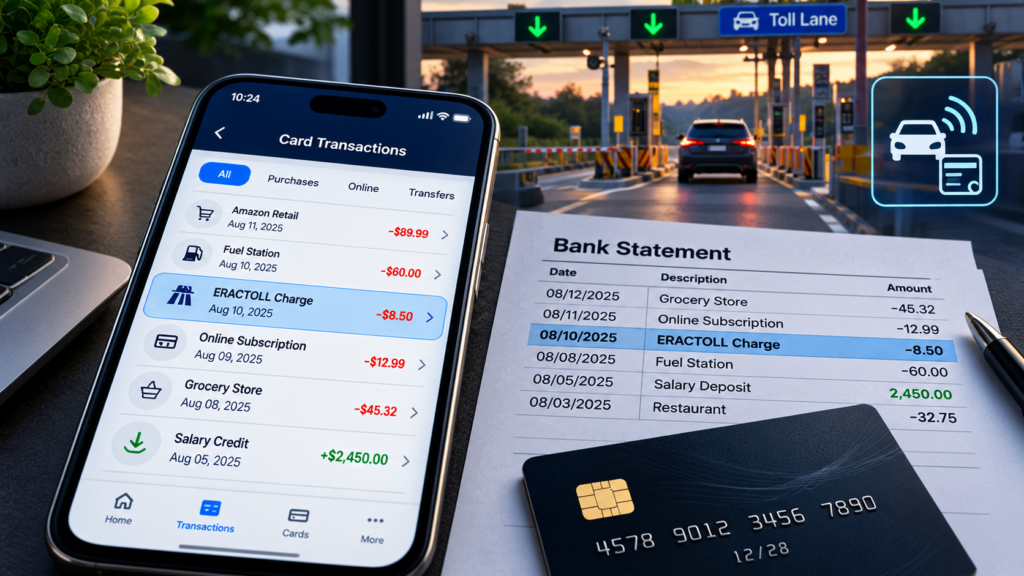
Understanding a billing descriptor is more than a matter of satisfying curiosity. It can help consumers maintain accurate financial records and identify potentially unauthorized activity.
An ERACTOLL charge explained carefully should therefore focus on identification rather than assumptions. The descriptor may indicate a transportation-related payment, a processor, or another billing arrangement, but the exact source should be confirmed through reliable transaction information.
Consumers who regularly review their statements are generally in a better position to distinguish normal payments from unusual activity.
A Practical Checklist for an Unfamiliar ERACTOLL Transaction
When an ERACTOLL entry appears, use this checklist:
- Record the exact amount.
- Check the transaction date.
- Determine whether the payment is pending or completed.
- Review recent travel and vehicle use.
- Check toll, parking, rental, and transportation records.
- Search email receipts and account notifications.
- Review additional merchant information in online banking.
- Ask authorized users whether they made the transaction.
- Contact the bank if the charge remains unexplained.
- Follow the bank’s instructions if unauthorized activity is confirmed.
This approach is simple, methodical, and less likely to result in an incorrect assumption.
The Importance of Reviewing Financial Statements
Bank statements provide more than a record of spending. They are also an important security tool.
Regular reviews can reveal forgotten subscriptions, duplicate transactions, unexpected fees, and potentially unauthorized payments. Even when a descriptor such as ERACTOLL looks unfamiliar, careful examination can often provide enough information to establish its origin.
Also read:Jacksonville Jaguars vs Tennessee Titans Match Player Stats
Financial awareness becomes especially important when several people use the same payment account or when cards are stored with multiple services.
ERACTOLL Charge Explained: Key Takeaway for Consumers
The most important point in an ERACTOLL charge explained guide is that an unfamiliar descriptor should be investigated rather than automatically labeled as fraudulent.
Start with the amount, date, location, and transaction status. Consider recent travel, vehicle activity, tolls, parking, and other transportation-related expenses. Review your records and ask authorized users about the payment.
If the charge remains unexplained, your bank or card issuer is the appropriate source for transaction-specific information and dispute guidance.
Understanding how billing descriptors work can turn a confusing statement entry into a manageable financial question. A few minutes of careful checking can help determine whether the charge is an ordinary payment, a delayed transaction, an account adjustment, or something that requires further action.
Frequently Asked Questions
What does ERACTOLL mean on a bank statement?
ERACTOLL is a transaction descriptor that may appear when a payment is processed under that billing name. The exact merchant or service behind it should be verified using the transaction details supplied by your bank.
Is an ERACTOLL charge always related to toll roads?
Not necessarily. A descriptor alone does not provide enough information to establish the exact nature of every transaction. Reviewing the date, amount, location, and additional merchant information is important.
Is an ERACTOLL charge a scam?
An unfamiliar ERACTOLL transaction is not automatically a scam. It could be a legitimate payment that uses a different billing descriptor. If you cannot identify it, contact your financial institution for verification.
Why does a toll payment sometimes appear under a different name?
Payment processing systems can use merchant or processor descriptors that differ from the consumer-facing brand name. This can make a legitimate transaction appear unfamiliar on a statement.
What should I do if I do not recognize ERACTOLL?
Check the amount and date, review recent travel and vehicle activity, look for receipts, and examine additional transaction information in your banking application. If it remains unexplained, contact your card issuer.
Can an ERACTOLL transaction be delayed?
Yes. Some payments can appear after the underlying service was used because transaction processing and account reconciliation may take additional time.
Should I dispute an ERACTOLL transaction?
If you have determined that you did not authorize the payment and cannot connect it to any legitimate activity, contact your bank or card issuer and ask about the appropriate dispute procedure.
How can I prevent unfamiliar charges?
Enable transaction alerts, review statements regularly, protect your card information, use strong account passwords, and monitor accounts that store your payment details.
Can another person using my vehicle create this type of charge?
It is possible for an authorized driver or another person using a vehicle connected to a payment or toll account to generate a transaction. Reviewing who used the vehicle around the transaction date can help identify the charge.
Where can I get the most accurate information about an ERACTOLL transaction?
Your bank or card issuer can generally provide transaction-specific information associated with the charge. They may be able to see merchant details that are not displayed on the customer’s statement.
Understanding Unfamiliar Charges With Confidence
An unfamiliar billing descriptor can look alarming at first, but careful investigation often provides a straightforward explanation. The most useful approach is to avoid assumptions, examine the available transaction information, compare it with personal records, and seek assistance from the financial institution when necessary.
For anyone searching for an ERACTOLL charge explained, the central lesson is simple: the name shown on a statement is a starting point, not always the complete identity of the merchant. By combining transaction dates, amounts, travel records, receipts, and official banking information, consumers can make better-informed decisions about unfamiliar payments.





1 thought on “ERACTOLL Charge Explained: Meaning, Causes & What to Do”