TriDeltathon: History, Race Format, Charity & Knoxville
Explore TriDeltathon history, its Knoxville triathlon format, charity mission, University of Tennessee connection, and transition to TriDeltaRUN in detail

TriDeltathon: History, Format, Charity Mission, and Its Lasting Legacy
TriDeltathon is a name associated with Knoxville, Tennessee, the University of Tennessee, Delta Delta Delta, and a distinctive approach to community-focused endurance racing. Unlike a conventional running competition, the historic event brought together swimming, cycling, and running in one compact triathlon. Its athletic character was complemented by a charitable purpose, giving participants an opportunity to compete while contributing to causes involving children and families.
For readers discovering TriDeltathon today, there is an important distinction to understand. Historical race information describes a pool-based triathlon, while more recent information connected to the same broader tradition points toward TriDeltaRUN, a 5K event. This difference explains why older pages can contain swimming and cycling details while newer event information focuses entirely on running.
The following guide explores the background, race structure, university connection, charitable importance, historical development, and current status associated with TriDeltathon.
TriDeltathon at a Glance
| Category | Details |
|---|---|
| Event Name | TriDeltathon |
| Historic Location | Knoxville, Tennessee |
| University Connection | University of Tennessee |
| Organization Connection | Delta Delta Delta |
| Historic Format | Pool swim, bicycle ride, and running |
| Historic Swim | 400 meters |
| Historic Bike | Approximately 6 miles |
| Historic Run | Approximately 3 miles |
| Participation | Individual and relay formats |
| Charitable Focus | Children’s causes |
| Related Modern Event | TriDeltaRUN 5K |
This biography table is important because TriDeltathon is sometimes confused with other Tri Delta activities. The name refers primarily to a historic sporting event rather than a person, company, software platform, or general organizational program.
What Is TriDeltathon?
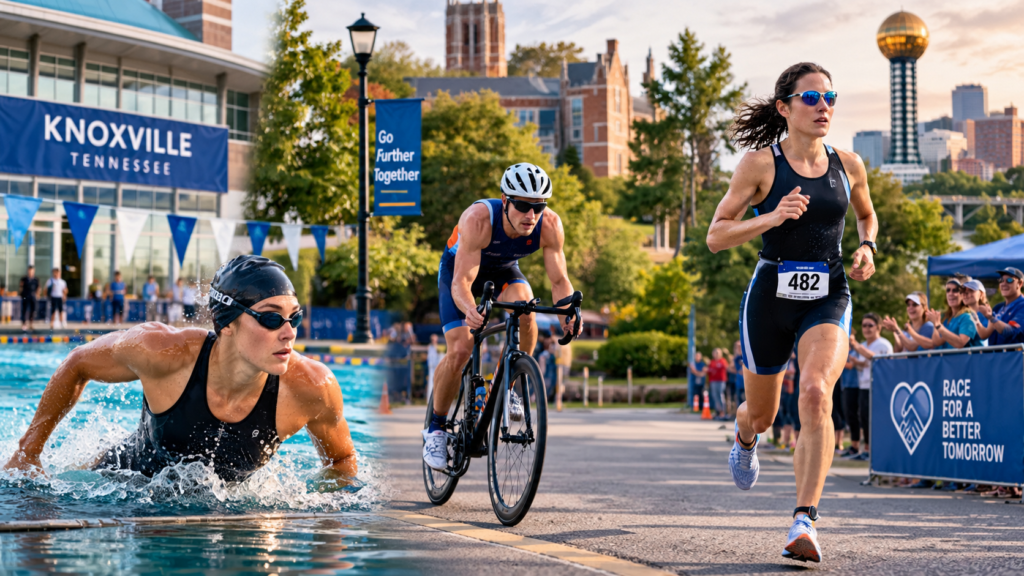
TriDeltathon was a short-format triathlon associated with the University of Tennessee community in Knoxville. The event followed the traditional sequence of a triathlon: competitors began with swimming, moved to cycling, and completed the competition with a running section.
Also read:gramhir .pro: Features, Uses, Safety and Complete Guide
What made TriDeltathon particularly distinctive was its pool-based swimming stage. Instead of beginning with an open-water swim in a lake or river, athletes used an indoor swimming facility. This provided a controlled environment while retaining the central challenge of a multisport competition.
Historical race information describes a 400-meter swim followed by a bicycle course of roughly six miles and a three-mile run. The distances were considerably shorter than those found in many major triathlon formats, creating a more compact event that could appeal to local athletes and participants interested in experiencing multisport racing.
The event also offered relay participation, allowing individuals with different athletic strengths to work together as a team.
The History Behind TriDeltathon
TriDeltathon became part of Knoxville’s local sporting and university culture over many years. Historical race material connects it with Delta Delta Delta and the University of Tennessee, while its charitable mission gave the competition a purpose beyond athletic performance.
Some historical references associate the event’s origins with the 1980s, although exact founding details should be treated carefully because surviving online records do not independently establish every historical claim. What is clear is that the race had developed into a long-running local tradition by the time of its later editions.
Its longevity is significant. Community races often depend on volunteers, university participation, sponsors, athletes, and charitable supporters. Maintaining such an event over many years requires more than a race course. It requires an organized community willing to preserve the tradition.
TriDeltathon represented that type of community involvement.
How the Historic TriDeltathon Worked
The appeal of TriDeltathon came partly from its straightforward three-stage structure.
1. The Swimming Stage
The historic race began with a 400-meter indoor pool swim. This was one of its defining characteristics.
Pool swimming differs from open-water swimming in several ways. Athletes do not have to deal with waves, changing weather conditions, or the navigational challenges associated with lakes and rivers. At the same time, competitors still have to manage their breathing, pacing, technique, and energy because the swim is only the first part of the overall event.
For athletes who were new to triathlon, the controlled swimming environment could make the experience feel more approachable.
2. The Cycling Stage
After completing the swim, competitors transitioned to the bicycle section. Historical descriptions place the cycling distance at approximately six miles.
Cycling introduced a different physical demand. Participants needed to maintain a steady pace without exhausting themselves before the final running section.
The transition itself was also important. Triathlon performance is not simply about being good at three separate sports. Moving efficiently from swimming to cycling and later from cycling to running requires preparation and organization.
3. The Running Stage
The final stage was a run of approximately three miles.
Running after swimming and cycling creates a different experience from completing a standalone three-mile race. The legs have already experienced two forms of exercise, and competitors must manage the accumulated fatigue while maintaining enough energy to finish strongly.
The running stage therefore served as both the final athletic test and the moment when competitors could see the finish line approaching.
Why the Short Format Mattered
TriDeltathon did not require the enormous distances associated with long-course triathlon competitions. Its relatively short format made the event distinctive within the local racing environment.
A participant could experience all three major triathlon disciplines without committing to the training demands associated with a much longer competition.
That does not mean the event was effortless. Swimming, cycling, running, and transitioning between them still require preparation. Instead, the shorter distances changed the scale of the challenge.
For experienced athletes, the compact course could provide an opportunity to race aggressively. For newer participants, it offered an introduction to multisport competition.
Individual and Relay Participation

Another notable aspect of TriDeltathon was the availability of individual and relay participation.
An individual competitor completed all three stages. This demanded preparation across swimming, cycling, and running.
Relay participation created another possibility. Members of a team could divide the disciplines among themselves, allowing different people to contribute according to their strengths.
This approach broadened the social character of the event. Someone who was an excellent swimmer but less experienced in running could still participate meaningfully as part of a relay team.
The relay format also reinforced the event’s community-oriented identity. Triathlon became not only an individual athletic challenge but also a shared experience.
TriDeltathon and Delta Delta Delta
The name TriDeltathon reflects its close association with Delta Delta Delta, commonly known as Tri Delta.
The organization has a strong presence in collegiate and alumnae communities across the United States. At the University of Tennessee, its connection with the race helped bring together students, volunteers, athletes, and supporters.
This relationship was significant because the event combined collegiate community life with athletic competition and fundraising.
Rather than existing purely as a competitive race, TriDeltathon represented a broader model of community engagement. Participants could train for an athletic challenge while supporting charitable objectives.
The Charitable Mission
Charity was one of the defining elements of TriDeltathon.
Historical and more recent related event information connects the tradition with children’s causes, including East Tennessee Children’s Hospital and Camp Eagle’s Nest. The charitable dimension gave the event an additional layer of meaning for participants and supporters.
A race can create an immediate sense of community because people gather around a common goal. When fundraising is incorporated into that experience, the event can extend its influence beyond the finish line.
For TriDeltathon, athletic participation and charitable support existed side by side. Competitors could focus on their own performance while also recognizing that their involvement contributed to a wider cause.
What Happened to TriDeltathon?
One of the most frequently asked questions surrounding TriDeltathon is whether the original swim-bike-run race is still held in the same format.
Available recent information indicates that the historic triathlon format is no longer the current event format. Older race pages and registration records remain accessible, which can create confusion for people searching for current information.
The situation became particularly important around 2020. The planned 2020 edition was canceled after the University of Tennessee moved to an online model during the disruption caused by the COVID-19 pandemic. Consequently, historical registration information can describe an event that did not ultimately take place.
This is why the date and status of a race should always be considered when reading archived event pages.
From TriDeltathon to TriDeltaRUN
A related event known as TriDeltaRUN has carried forward parts of the community and charitable tradition in a different format.
Rather than using swimming, cycling, and running, TriDeltaRUN is a 5K running event. Recent information places the event around the University of Tennessee Agriculture Campus and UT Gardens, with much of the route associated with the Third Creek Greenway.
The distinction between the two events is important.
TriDeltathon historically involved:
- A 400-meter pool swim
- Approximately six miles of cycling
- Approximately three miles of running
- Individual and relay participation
The newer TriDeltaRUN format centers on:
- A 5K running course
- Running-focused preparation
- University-area community participation
- Continued charitable involvement
Therefore, TriDeltaRUN should not simply be described as the same race under a different name. It is better understood as a newer event connected to the broader tradition.
TriDeltathon and Knoxville’s Sporting Culture
Knoxville has a strong connection with collegiate athletics, recreational sports, road races, and outdoor activities. The University of Tennessee campus provides a natural setting for community events because students, residents, alumni, and visitors regularly interact around athletic and cultural activities.
TriDeltathon fit comfortably within that environment.
Its combination of a university setting, compact race distances, volunteers, and charitable fundraising gave it a character that differed from large commercial endurance competitions.
The event was local in scale but meaningful in purpose.
Why TriDeltathon Remains Interesting
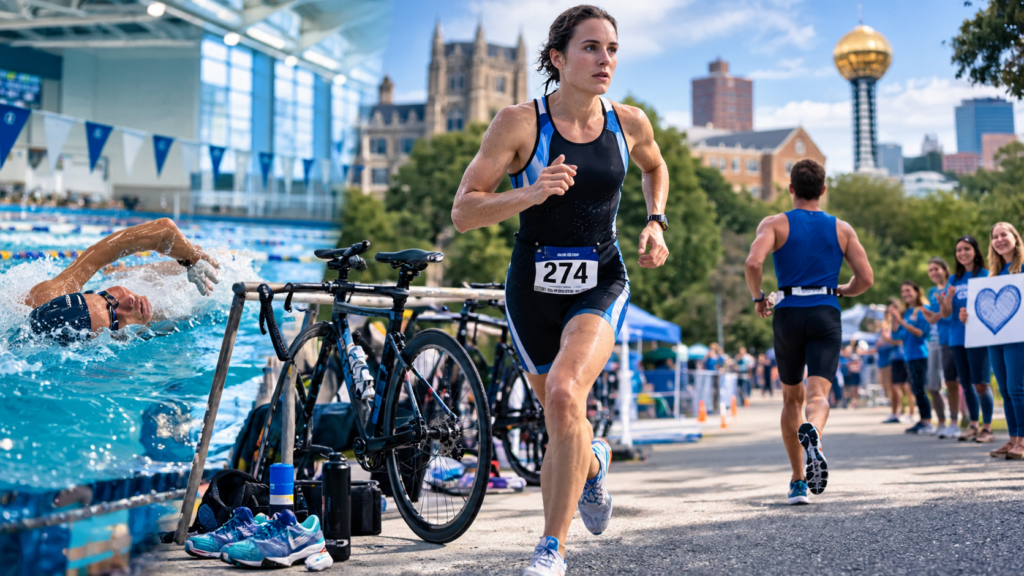
Even though the original format is now primarily a historical subject, TriDeltathon remains interesting for several reasons.
First, it demonstrates how a relatively small sporting event can become part of a community’s identity.
Second, its pool-based triathlon format was unusual compared with competitions that use open-water swimming.
Third, its connection with university life and Delta Delta Delta gave the race a strong social foundation.
Finally, its charitable mission demonstrates how athletic events can be used to generate awareness and financial support for important causes.
These characteristics help explain why the name continues to appear in searches even after the original event format changed.
Training for a Historic TriDeltathon-Style Race
Someone preparing for a race modeled on the historic TriDeltathon format would need balanced preparation rather than concentrating on one discipline.
Also read:MagazinePanda.com: Complete Guide to the Digital Magazine
Swimming sessions would help develop technique, breathing control, and endurance. Cycling workouts would build leg strength and cardiovascular capacity. Running sessions would improve finishing speed and stamina.
Transitions would also deserve attention.
A competitor could be excellent in all three sports but still lose valuable time through inefficient transitions. Practicing how to move from swimming equipment to cycling gear and from cycling to running can make a noticeable difference in a short event.
The compact nature of the race would also make pacing important. Starting the swim too aggressively could leave an athlete fatigued during the bike and run stages.
The Difference Between Historical and Current Information
Anyone researching TriDeltathon should be cautious when using old race listings.
An archived page can contain genuine information about the event while no longer representing a current race. Dates, registration procedures, course details, prices, and participation rules can all become outdated.
This is particularly important because the name TriDeltathon continues to appear in search results alongside newer information about TriDeltaRUN.
The safest approach is to identify the year associated with every piece of information before treating it as current.
Frequently Asked Questions
What is TriDeltathon?
TriDeltathon was a pool-based triathlon associated with the University of Tennessee and Delta Delta Delta in Knoxville, Tennessee. It combined swimming, cycling, and running with a charitable mission.
What were the TriDeltathon distances?
Historical race information describes a 400-meter swim, approximately six miles of cycling, and approximately three miles of running.
Was TriDeltathon an open-water triathlon?
No. One of its defining features was the indoor pool swim, which distinguished it from many triathlons that begin in lakes, rivers, or oceans.
Could people compete as relay teams?
Yes. Historical registration information included both individual and relay participation, allowing teams to divide the three disciplines among their members.
Was TriDeltathon connected to the University of Tennessee?
Yes. The event was closely associated with the University of Tennessee community in Knoxville.
What charity did TriDeltathon support?
The event’s charitable tradition has been associated with children’s causes, including East Tennessee Children’s Hospital and Camp Eagle’s Nest.
Is TriDeltathon still held as a triathlon?
Recent information indicates that the original swim-bike-run format is no longer the current event format. Related modern activity has been represented by TriDeltaRUN, a 5K.
Is TriDeltaRUN the same as TriDeltathon?
Not exactly. TriDeltaRUN uses a running-only 5K format, while the historic TriDeltathon was a three-discipline triathlon. They share connections through the Tri Delta community and charitable tradition.
Why can old TriDeltathon information still be found online?
Archived registration pages, race descriptions, and historical references can remain indexed by search engines long after an event has changed or ended. These pages are useful for historical research but should not automatically be treated as current event information.
Where was the event held?
The historic TriDeltathon was associated with Knoxville and the University of Tennessee, with the swimming component connected to the university’s aquatic facilities.
The Enduring Story of TriDeltathon
TriDeltathon represents more than a collection of swimming, cycling, and running distances. Its significance comes from the combination of sport, university community, volunteer participation, and charitable purpose.
Its historic format offered athletes a compact but demanding multisport challenge, while relay participation created an accessible team dimension. Its connection with Delta Delta Delta strengthened its community identity, and its fundraising mission gave participants another reason to take part








1 thought on “TriDeltathon: History, Race Format, Charity & Knoxville”