How to Plan Flyers and Leaflets That People Actually Read
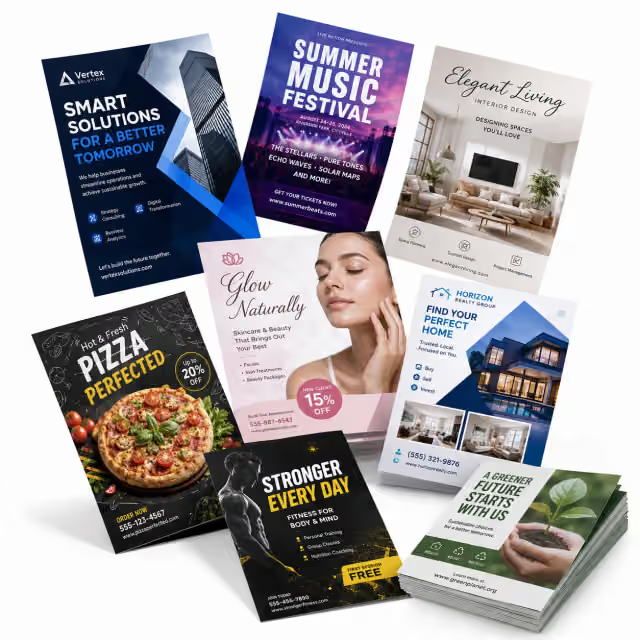
A flyer is one of the cheapest ways to put a message directly into someone’s hands. Restaurants use them for new menus, property developers for show unit launches, and tuition centres for enrolment drives. Yet many flyers end up in the bin within seconds because the message is unclear or the paper feels flimsy.
Good flyer printing starts long before the file goes to the printer. The size, paper, finish and layout all affect whether people keep your flyer or throw it away. Here is how to plan each part so your next print run works harder for your business.
1. Start With One Clear Goal
Every flyer should do one job. That might be bringing people to a store opening, collecting sign-ups for a class or promoting a limited-time discount.
When a flyer tries to sell five products and announce two events, readers do not know where to look. Decide on the single action you want people to take, then build the headline, image and call to action around it.
A useful test is to describe the flyer’s purpose in one sentence. If you cannot, the design probably needs to be simplified.
2. Pick the Right Size for How It Will Be Used
Size affects cost, handling and how much content fits. The most common formats in Malaysia follow the A-series and DL standards:
- A4 (210 x 297 mm): Suits menus, price lists and information-heavy handouts.
- A5 (148 x 210 mm): The most popular flyer size. It is easy to hold in one hand and still has room for an image and key details.
- A6 (105 x 148 mm): Postcard-sized and useful for compact promotions or counter displays.
- DL (99 x 210 mm): A slim format that fits a standard DL envelope, which makes it a good choice for mail inserts.
Think about where the flyer will be distributed. Street handouts and mailbox drops work well with A5 or A6, while a menu left on restaurant tables may need the space of A4.
3. Choose Paper Based on Lifespan, Not Just Price
Paper weight is measured in GSM (grams per square metre). A higher GSM means a thicker, sturdier sheet.
For a one-off handout, a lighter 80 to 100 GSM gloss art paper keeps costs low across thousands of copies. For flyers that people are meant to keep, such as menus, event programmes or price lists, 128 to 150 GSM feels more substantial and holds up better.
The paper’s surface matters too:
- Gloss art paper makes photos and bright colours stand out, which suits food, retail and property promotions.
- Matte art paper reduces glare and is easier to read, which suits text-heavy layouts.
- Uncoated (simili) paper can be written on with a pen, so it works for forms and registration slips.
- Synthetic paper resists tearing and moisture, which helps for flyers used outdoors or handled often.
4. Use Finishing Where It Adds Value
Finishing options can make a flyer more durable or more memorable, but each one adds cost. Use them when they serve the flyer’s purpose.
Lamination adds a protective film over the print. Gloss lamination makes colours look richer, while matte lamination gives a softer, premium feel with less glare. A perforation line lets readers tear off a coupon or voucher neatly. Foil stamping adds a metallic accent to a logo or headline, which can work for upscale launches or festive promotions. Rounded corners give a softer look and stop edges from bending as quickly.
A budget handout for a pasar malam stall rarely needs any of these. A flyer for a premium product launch might benefit from one or two.
5. Design for a Three-Second Glance
Most people decide whether to read a flyer almost immediately. The layout should tell them what it is about at a glance.
A few principles help:
- Put the main benefit or offer in a large, clear headline.
- Use one strong image instead of several small ones.
- Keep body text short and break it into small chunks.
- Make the call to action obvious, such as “Scan to book” or “Visit us this Saturday”.
- Leave enough white space so the page does not feel crowded.
If the flyer is double-sided, use the front to attract attention and the back for details such as the address, map, terms or a QR code.
6. Prepare the Artwork Properly
Printing problems often come from the file, not the printer. Before sending your design, check that:
- The artwork is set up at the correct size with bleed, usually 3 mm on each side.
- Important text sits inside a safe margin away from the trim line.
- Images are at least 300 DPI at print size so they do not look blurry.
- The file uses CMYK colour, since colours on a screen can look different on paper.
- Spelling, phone numbers, prices and dates are correct.
Ask for a digital proof if one is available. It is much cheaper to fix a mistake at this stage than after thousands of copies are printed.
7. Plan Quantity and Timing Together
Unit prices usually drop as quantity rises, so ordering slightly more can be cheaper per piece than placing a second small order later. However, printing far more than you can distribute only wastes money and paper.
Estimate how many flyers you can realistically hand out, mail or display before the information goes out of date. Then work backwards from your event or campaign date to allow time for design, proofing, printing and delivery. Finishing such as lamination or foil stamping can add extra working days.
8. Work With a Supplier That Shows Clear Options
When comparing printers, look for clear information on paper types, sizes, finishing and production time before you order. Transparent pricing helps you compare options without waiting for multiple quotes.
CUSTA, an online printing and merchandise provider in Malaysia, lists its flyer papers, standard sizes and finishing options on its product pages, so businesses can compare choices and check pricing before placing an order.
Conclusion
An effective flyer has one clear goal, a size that fits how it will be used and paper that matches how long people should keep it. Add finishing only when it supports the message, design for a quick glance and check the artwork carefully before printing.
With a little planning, a simple flyer can bring real customers through your door.